Quick answer: Trenchless sewer repair fixes a damaged line through one or two small access points instead of trenching the whole yard. The two methods are pipe lining (CIPP), which cures a new pipe inside the old one, and pipe bursting, which pulls a new pipe in while breaking the old one apart. In California, trenchless work generally runs about $80 to $250 per foot, and which method fits depends on how much of your original pipe is still intact.
When a sewer line finally fails, the first question most homeowners ask Stockton Drain Pros is whether the whole yard has to come up to fix it. Often it does not. Here is how trenchless repair works, the two methods we use, and how to tell which one your line actually needs.
What "Trenchless" Actually Means
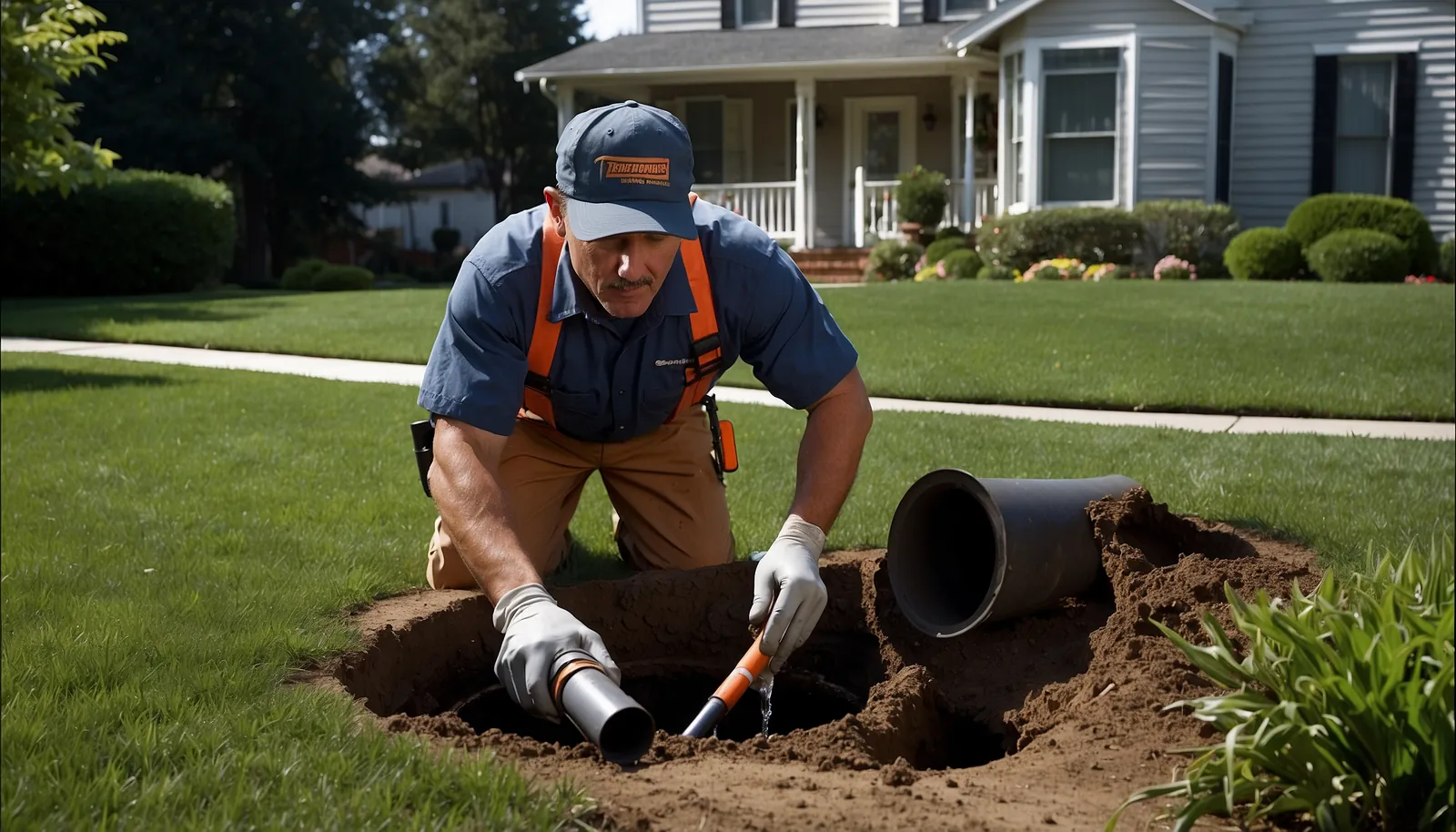
Traditional sewer repair means digging a trench the length of your sewer lateral to reach the broken pipe, which usually means tearing up a lawn, a driveway, or a patio and then paying to put all of it back. Trenchless repair does the same job through one or two small access pits, fixing the pipe in place underground while the yard above stays mostly intact. For a typical Stockton home with a lateral running under a front lawn or a concrete drive, that difference is the entire reason to consider it.
There are two trenchless methods, and they solve different problems. Knowing which one your line needs starts with a camera inspection, because the deciding factor is how much of your original pipe is still structurally there.
Method 1: Pipe Lining (CIPP)
Cured-in-place pipe lining, or CIPP, threads a resin-saturated liner into your existing sewer pipe and inflates it against the pipe wall. The resin hardens in place, and when it cures you have a new, jointless pipe formed inside the old one. Because the liner bridges cracks and seals separated joints, it also shuts the door on the root intrusion that plagues older Stockton laterals. The catch is that lining needs a host pipe with enough structure left to hold the liner while it cures, generally a pipe that is cracked or corroded but not collapsed.
Method 2: Pipe Bursting
Pipe bursting takes the opposite approach. A bursting head is pulled through the old pipe on a cable, and as it travels it fractures the original pipe outward into the surrounding soil while dragging a brand-new pipe in behind it. You end up with a completely new line, not a liner inside an old one. Because it destroys and replaces the original, bursting works even when the old pipe is collapsed, badly corroded, or made of a material you would rather be rid of.
Which One Your Line Needs
The honest answer is that the pipe decides, not a sales preference. If the camera shows a lateral that is cracked, root-invaded, or leaking at the joints but still holding its shape, lining is usually the efficient choice. If it shows a pipe that has collapsed, offset badly, or corroded to the point that there is not enough left to line, bursting is the method that actually solves it. This is exactly why we run a camera before quoting anything, because picking the method before you have seen inside the pipe is guesswork.
Not sure if your line can be lined?
We camera the pipe first and tell you which trenchless method actually fits, with no guesswork.
What Trenchless Costs in Stockton
Trenchless work is generally priced by the foot. Across California the going range runs roughly $80 to $250 per foot depending on the method, the depth and access of the line, and local permit requirements, with lining and bursting landing in similar territory once the job is scoped. A full lateral can therefore range widely, and the only number worth trusting is the one you get after the line has been inspected. The reason trenchless often pencils out despite a higher per-foot cost is restoration: when you are not paying to rebuild a driveway, a walkway, or mature landscaping, the total frequently comes in at or below a dig. For total-project numbers, see our Stockton sewer line replacement cost guide.
When Digging Still Makes Sense
Trenchless is not automatically the answer. A short, shallow spot repair where roots enter at a single joint can be cheaper to expose and fix directly. A lateral that has to be re-routed, or one where the access pits would themselves tear up hardscape, can erase the trenchless advantage. And a badly bellied line needs to be re-graded, which lining cannot fix. A straight answer about when a conventional sewer line repair is the smarter spend is part of the job, and we would rather give you that than talk you into the pricier method.