Traditional sewer repair reaches the broken pipe by digging a trench, which often means tearing up a lawn or a driveway and paying to put it back. Trenchless repair does the job through one or two small access points, restoring the pipe in place underground while the surface above stays mostly intact.
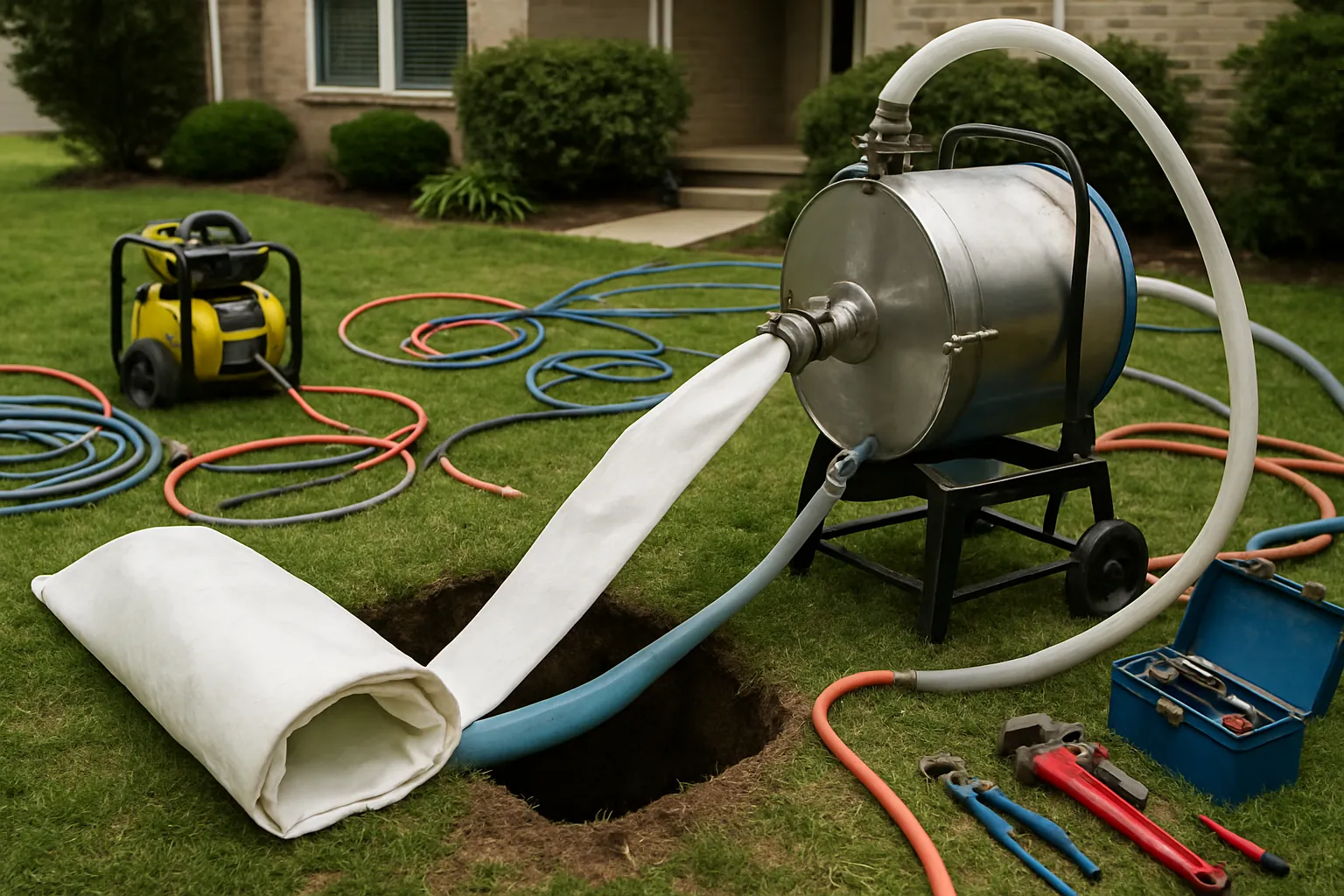
The method we use for trenchless repair is cured-in-place pipe lining (CIPP). A resin-saturated liner is drawn into the existing pipe and inflated against the wall, then cured until it hardens into a new, jointless pipe formed inside the old one. Because the liner seals cracks and open joints, it also shuts out the root intrusion that plagues older Stockton laterals. For lines too deteriorated or collapsed to line, we also offer pipe bursting, a trenchless replacement that pulls a new pipe into place while breaking the old one apart.
Trenchless is not automatically better than a dig, and we do not pitch it that way. It is an excellent option when the pipe qualifies, and the wrong tool when it does not. The deciding factor is the condition of your existing pipe, which is why every trenchless job starts with a camera inspection. For a deeper look at the methods and how the numbers compare, see our guide to pipe lining vs pipe bursting.