Quick answer: Only pee, poop, and toilet paper should go down a Stockton toilet. Everything else, including so-called flushable wipes, paper towels, feminine products, dental floss, grease, and cat litter, does not break down and snags in the line. In older Stockton homes with clay or cast iron laterals, that is one of the most common causes of a main-line clog and a sewage backup.
A large share of the main-line clogs Stockton Drain Pros clears trace back to something simple: stuff went down a toilet that never should have. Here is the honest list of what not to flush, and why it matters more in Stockton than the label on the package would have you believe.
The Only Three Things That Belong in a Toilet
Human waste and toilet paper. That is the entire list. Toilet paper is engineered to start breaking apart the moment it gets wet, which is why it clears a healthy line without trouble. Almost everything else people flush is designed to do the opposite, to stay intact when wet, and that is precisely what turns it into a clog. A newer home might tolerate the occasional mistake for a while. In the older Stockton neighborhoods running clay and cast iron laterals, the margin for error is a lot thinner.
Flushable Wipes Are the Worst Offender
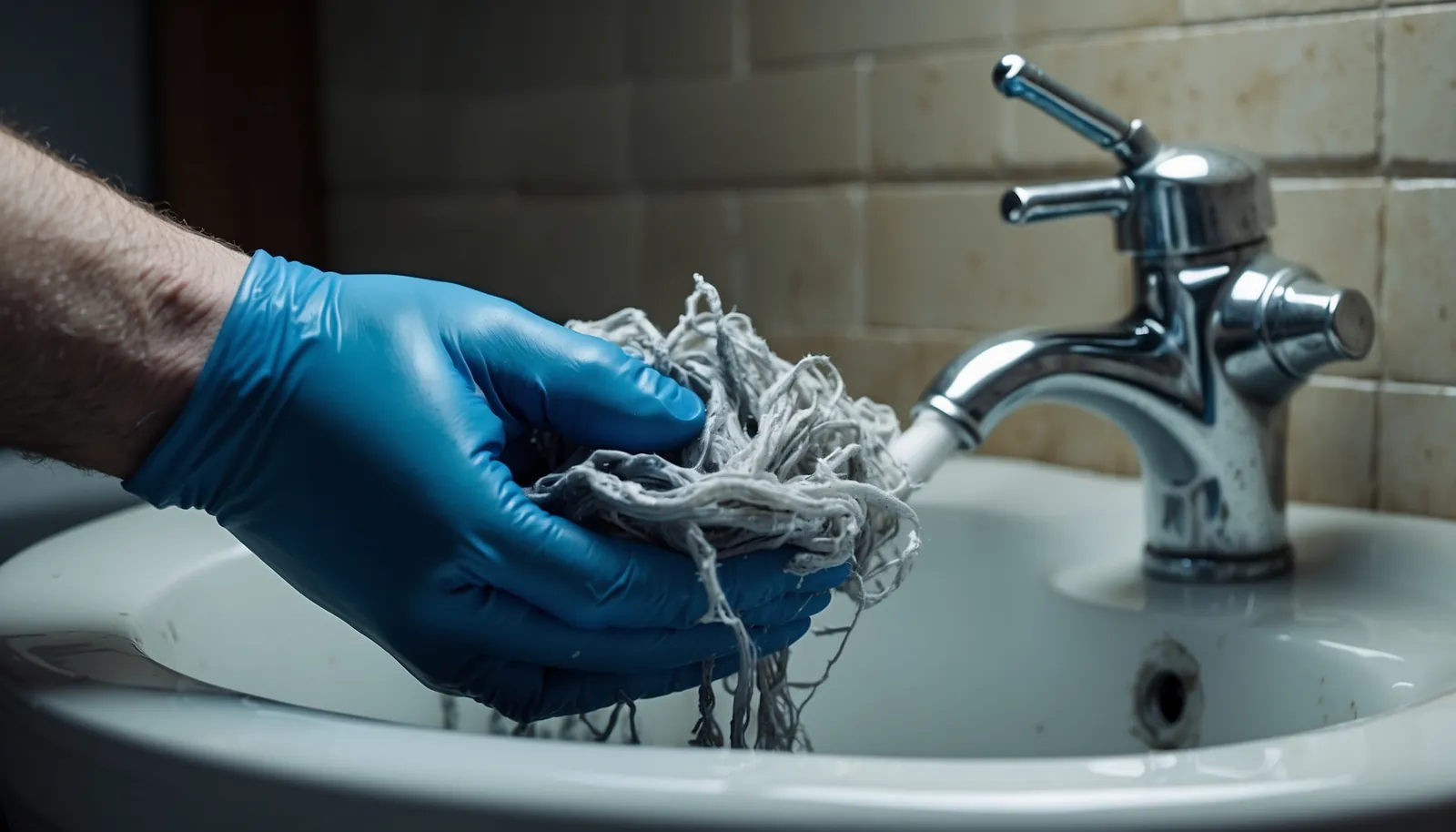
If you take one thing from this page, make it this: so-called flushable wipes are not flushable in any way that matters. They disappear from the bowl, which is the whole problem, because they do not break down the way toilet paper does. They travel a few feet into your lateral, snag on a rough spot or a root, and start catching everything that comes after them. Combine them with grease poured down the kitchen sink and you get the dense, ropey mass plumbers pull out of main lines constantly. Wipes are one of the most common causes of a main-line clog we see, in homes whose owners had no idea the box lied to them.
The Full Do-Not-Flush List
Beyond wipes, keep all of the following out of the toilet, because none of it breaks down in a sewer line: paper towels and facial tissue, which are made to hold together when wet; feminine hygiene products and cotton balls or swabs, which absorb and expand; dental floss and hair, which tangle into a net that catches debris; so-called flushable cat litter, which clumps and sets like concrete; and old medications, which belong at a pharmacy take-back rather than in the water supply. Grease, fats, and cooking oil deserve their own warning, because they pour down as a liquid and then cool and harden inside the pipe, which is how the grease half of a wipe-and-grease clog gets started. For more on that, see our take on whether chemical drain cleaners actually work and what quietly slows a garbage disposal line.
Already dealing with a slow or backed-up drain?
We will clear it and camera the line to show you exactly what caused it.
Why It Is Worse in Older Stockton Homes
Two things make the do-not-flush list matter more here than in a brand-new subdivision. First, a lot of Stockton housing runs on clay or cast iron laterals installed decades ago, and the inside of those pipes is rough, not smooth like new PVC. A wipe or a wad of paper towel that would slide through a new line grabs onto that rough wall instead. Second, those same older lines tend to have root intrusion at the joints, and every root that pokes into the pipe is one more place for flushed debris to hang up and build into a blockage. On the low-lying lots near the delta, a main-line clog is also more likely to turn into a backup that comes up through the lowest drain in the house.
If Your Drain Is Already Slow or Backing Up
If you are past prevention and a toilet is already draining slowly, gurgling, or backing up into a tub, stop flushing. Every additional flush adds to a blockage that has nowhere to go. Chemical drain cleaners will not clear a wad of wipes in the main line, and they make the eventual cleanout more hazardous. The fix is to clear the line mechanically or with hydro jetting, and if it keeps happening, to camera the main line and find out whether wipes, grease, or roots are behind it. When sewage is actually coming up, that is an emergency, and the sooner the line is opened the less damage you deal with.